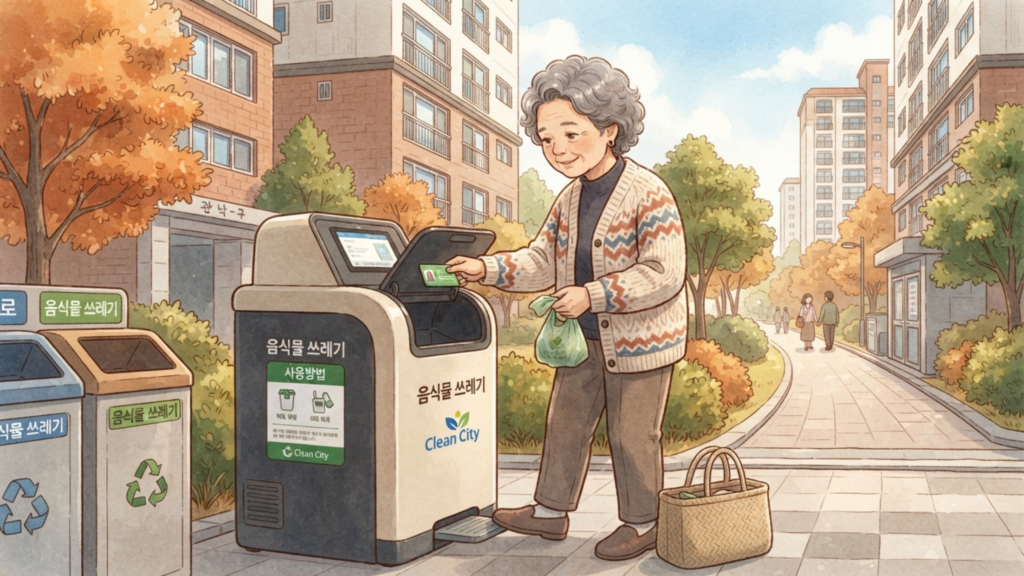

대한민국은 세계적으로도 유례를 찾기 힘든 독특하고 철저한 음식물 쓰레기 처리 체계를 갖추고 있습니다. 한국에 처음 살아보는 분들이라면 “왜 음식물 쓰레기를 이렇게까지 까다롭게 나눠서 버려야 하지?”라는 의문이 들 수밖에 없는데요. 오늘은 그 이유와 실제로 어떻게 배출해야 하는지 함께 알아보겠습니다.
1. 한국형 시스템의 핵심
- 무엇을: 음식물 쓰레기를 일반 쓰레기와 완전히 분리해 사료, 퇴비, 바이오가스로 재활용합니다.
- 어떻게: RFID 종량제 기기나 전용 납부 필증(스티커)을 사용하여, 버린 양만큼 수수료를 냅니다.
- 왜: 자원 재활용과 환경 보호가 국가적 과제이기 때문입니다.
2. 왜 한국은 ‘다르게’ 처리해야만 했을까?
대부분의 서구권이 매립이나 소각을 택할 때, 한국이 분리 배출을 고수한 이유는 명확합니다.
- 국토의 한계와 악취 문제: 국토가 좁아 매립지 확보가 어렵고, 수분 많은 음식물 쓰레기는 매립 시 심각한 악취와 침출수를 유발합니다.
- 발효 중심의 식문화: 국물과 염분이 많은 한국 음식은 단순 매립 시 환경오염을 가속화합니다. 따라서 초기부터 이물질을 걸러내는 정밀한 분리가 필수적입니다.
- 종량제 원칙: ‘배출자 부담 원칙’을 통해 개개인에게 배출량 감량 동기를 부여함으로써 음식물 쓰레기 발생량 자체를 억제하고 있습니다.
💡 실제로 얼마나 낼까? 계산 예시
1인 가구가 한 달에 음식물 쓰레기를 약 5kg 정도 배출한다고 가정하면, RFID 종량제 기준(약 kg당 20~30원)으로 계산했을 때 월 부담액은 대략 100~150원 수준으로 매우 저렴합니다. 다만 아예 안 버리는 게 아니라 정확히 배출한 만큼만 부과되는 구조라, 음식을 필요한 만큼만 만들고 남기지 않는 습관을 들이면 자연스럽게 비용도 줄어듭니다.
실전 가이드: 실제로 어떻게 배출하나요?
- RFID 종량기 사용법 (아파트 등 공동주택): 단지 내 설치된 음식물쓰레기 수거함에 부착된 카드 인식기에 관리사무소에서 발급받은 카드를 태그하면 뚜껑이 열립니다. 쓰레기를 넣고 뚜껑을 닫으면 무게가 자동으로 측정되어 관리비에 합산 청구됩니다.
- 전용 봉투/스티커 사용법 (원룸·빌라 등): 동네 마트나 편의점에서 ‘음식물쓰레기 전용 봉투’를 구매해 담아 버리거나, 기존 통에 ‘음식물쓰레기 종량제 스티커’를 붙여서 배출합니다. 지역(구)마다 사용하는 방식이 다르니 미리 확인이 필요합니다.
외국인이 알아둘 점
- 일반쓰레기와 절대 섞으면 안 됩니다: 음식물쓰레기를 일반쓰레기 봉투에 섞어 버리다 적발되면 과태료 대상이 될 수 있습니다. 반드시 전용 통이나 봉투를 사용하세요.
- ‘음식물’이 아닌 것들을 주의하세요: 딱딱한 뼈, 조개·달걀 껍데기, 양파·마늘 껍질, 티백, 과일 씨앗류는 음식물쓰레기가 아니라 일반쓰레기로 분류됩니다. “동물이 먹을 수 있는가”가 기준이라고 생각하면 쉽습니다.
- RFID 카드는 어디서 받나요?: 아파트 입주 시 관리사무소에서 발급받을 수 있고, 분실 시에도 관리사무소에 문의하면 재발급이 가능합니다. 원룸이라면 집주인이나 부동산에 배출 방식을 미리 물어보시는 걸 추천드립니다.
- 국물류는 최대한 제거하고 버리세요: 국물이 많으면 무게가 늘어나 비용이 더 나올 뿐 아니라, 수거 과정에서 냄새와 오염의 원인이 됩니다. 물기를 최대한 짜내고 버리는 게 좋습니다.
처음에는 번거롭게 느껴질 수 있지만, 이 시스템 덕분에 한국의 음식물쓰레기 재활용률은 세계 최고 수준(약 95% 이상)을 자랑합니다. 조금만 익숙해지면 오히려 이렇게 철저한 분리배출 문화가 자랑스럽게 느껴지실 거예요.
일반 생활폐기물 분리배출 규정이 궁금하시다면, [수도권 생활폐기물 직매립 전면금지](여기에 해당 글 링크)도 함께 확인해보세요.
English Summary
South Korea separates food waste from general trash and recycles it into animal feed, compost, or biogas — a rare system worldwide, driven by limited landfill space and a broth/salt-heavy food culture that worsens pollution if landfilled. Residents pay per amount discharged, either via RFID-tagged bins (apartments) or designated bags/stickers (villas, officetels). Key things to know: hard bones, shells, and fruit pits count as general waste, not food waste; get your RFID card from your building’s management office; and always drain excess liquid before disposal. Mixing food waste into general trash bags can result in fines.
본 콘텐츠는 AI의 도움을 받아 작성되었으며, 최신 정책 확인 및 필자의 검토·수정을 거쳐 게시되었습니다.

식물 쓰레기봉투의 모습