[K-Life] 무인 매장에 직원이 없는 이유, 한국의 신뢰 문화와 기술의 만남.(The reason why there are no staff in unmanned stores: The meeting of Korea’s trust culture and technology.) – Precious Day

[K-Life] 무인 매장에 직원이 없는 이유, 한국의 신뢰 문화와 기술의 만남.(The reason why there are no staff in unmanned stores: The meeting of Korea’s trust culture and technology.)

Featured image
K-Life

[K-Life] 무인 매장에 직원이 없는 이유, 한국의 신뢰 문화와 기술의 만남.(The reason why there are no staff in unmanned stores: The meeting of Korea’s trust culture and technology.)

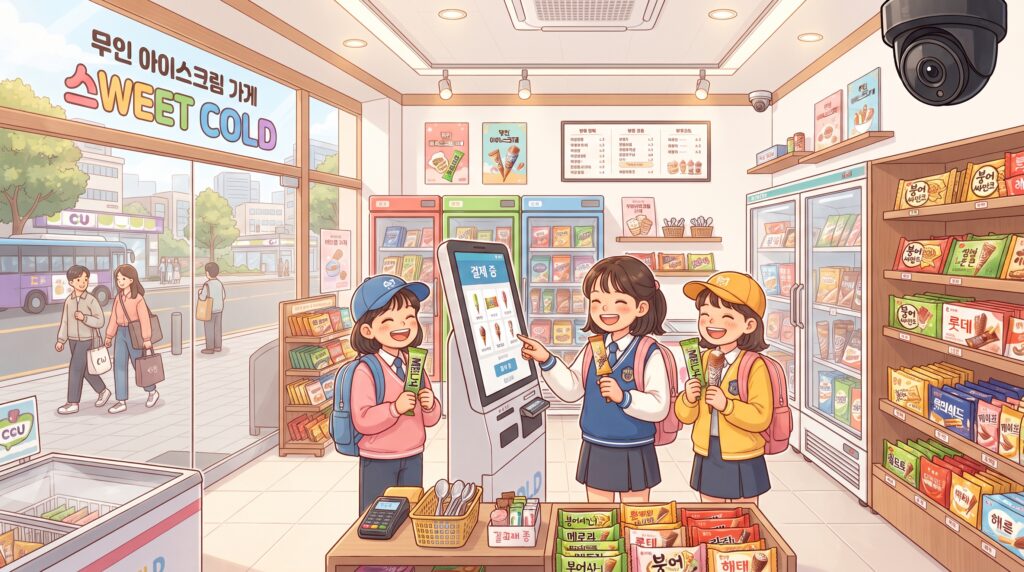
만약 당신의 노트북을 카페에 두고 화장실에 다녀왔는데, 10분 뒤에도 그대로 있다면 어떨까요? 대부분의 국가에서는 상상하기 힘든 이 장면이 한국에서는 매일 일어납니다. 한국 여행이나 생활을 하는 외국인들이 가장 신기해하면서도 충격(?)을 받는 포인트 중 하나, 바로 ‘무인 점포’입니다. 카페나 식당에서 노트북을 두고 화장실을 다녀와도 물건이 그대로 있고, 24시간 운영되는 무인 아이스크림 가게나 편의점에서는 직원을 찾을 수 없죠. 도대체 한국의 무인 매장은 어떻게 이런 ‘신뢰의 시스템’으로 운영될 수 있는 것일까요? 그 배경에는 한국 사회만의 독특한 문화적 토양이 자리 잡고 있습니다.

If you left your laptop at a cafe and went to the restroom, and it was still there 10 minutes later, how would you feel? This scene, which is hard to imagine in most countries, happens every day in Korea. One of the points that foreigners traveling or living in Korea find most fascinating and shocking is the ‘unmanned store.’ You can leave your laptop at a cafe or restaurant, go to the restroom, and find your belongings exactly where you left them, and you can’t find any staff at 24-hour unmanned ice cream shops or convenience stores. How can Korea’s unmanned stores operate with such a ‘trust system’? Behind it lies a unique cultural soil within Korean society.

1. 무인 매장의 기적을 만든 ‘한국형 시민의식’의 뿌리.

1. The roots of ‘Korean-style civic consciousness’ that created the miracle of unmanned stores.

한국의 무인 점포가 활발하게 운영될 수 있는 것은 단순히 기술이 좋아서만이 아닙니다. 한국인들이 어릴 적부터 체득해 온 공동체 문화와 높은 시민의식이 그 밑바탕이 되었습니다.

  • 학교에서 배운 ‘함께하는 책임’: 한국 학생들은 학교 급식 시간과 청소 시간을 통해 공동체의 가치를 배웁니다. 친구들과 순번을 정해 배식을 돕고 잔반을 줄이는 과정에서 협동심과 배려를 익히며, 교실과 운동장을 직접 청소하는 문화는 ‘내 공간뿐만 아니라 공공장소도 내 손으로 관리한다’는 책임 의식을 심어주게 됩니다.
  • 생활 속에서 내면화된 질서: 철저한 분리수거부터 실내에서 신발을 벗는 문화까지, 한국인들은 사회 구성원으로서 지켜야 할 질서를 일상에서 자연스럽게 체득하게 됩니다. 이런 작은 습관들이 쌓여 한국을 “세계에서 가장 깨끗하고 질서 있는 나라”로 만들었으며, 이러한 청결과 질서 의식이 무인 점포 이용 시에도 규칙을 준수하는 밑거름이 됩니다.
  • 조직 문화가 준 가르침: 많은 한국 남성이 경험하는 군 생활은 사회의 규칙과 위계, 협동의 가치를 체험하는 과정입니다. 개인의 이익보다 조직의 목표를 우선시했던 이러한 경험들은 사회 구성원들이 공공 질서를 존중하는 기반이 되기도 합니다.
  • 사회적 신뢰의 문화: 한국은 세계적으로도 치안 수준이 매우 높고 타인의 물건을 훼손하거나 가져가는 비율이 낮아 ‘사회적 신뢰도’가 두텁습니다. 덕분에 이용자 대부분이 규칙을 준수하고 양심적으로 결제하는 문화가 정착될 수 있었습니다.

The active operation of unmanned stores in Korea is not just because of good technology. The community culture and high civic consciousness that Koreans have learned since childhood serve as the foundation.

  • ‘Shared responsibility’ learned at school: Korean students learn the value of community through school lunch and cleaning times. By taking turns helping with food service and reducing food waste with friends, they learn cooperation and consideration. The culture of cleaning classrooms and playgrounds themselves instills a sense of responsibility that ‘I manage public spaces just like my own space.’
  • Order internalized in daily life: From thorough waste separation to the culture of taking off shoes indoors, Koreans naturally internalize the order that must be kept as members of society. These small habits have made Korea “the cleanest and most orderly country in the world,” and this sense of cleanliness and order becomes the basis for following rules even when using unmanned stores.
  • Lessons from organizational culture: The military life experienced by many Korean men is a process of experiencing social rules, hierarchy, and the value of cooperation. Such experiences, which prioritized organizational goals over personal interests, become a foundation for members of society to respect public order.
  • Culture of social trust: Korea has a very high level of public safety globally, and the rate of damaging or taking others’ belongings is low, so ‘social trust’ is thick. Thanks to this, a culture where most users follow the rules and pay conscientiously has been able to take root.

2. 편리함을 더해주는 세계 최고 수준의 디지털 인프라.

2. World-class digital infrastructure that adds convenience.

물론 양심만으로 운영되는 것은 아닙니다. 한국의 압도적인 기술력이 이 신뢰 문화에 ‘안전장치’를 더해주고 있습니다.

  • 촘촘한 치안 감시망: 한국의 주요 도심 지역은 평균적으로 다른 국가의 대도시보다 단위 면적당 CCTV 설치 밀도가 3~5배 이상 높게 구축되어 있어, 범죄 예방 및 사후 대응에 매우 효과적입니다.
  • 압도적인 네트워크 환경: 한국은 인터넷 보급률이 99%에 달하며, 주요 도시 내 어디서나 500m 이내에 고속 네트워크 접속이 가능한 지점(Public Wi-Fi 및 5G 기지국)이 촘촘하게 배치되어 있습니다. 덕분에 무인 키오스크와 결제 시스템이 0.1초의 지연 없이 실시간으로 운영될 수 있습니다.
  • 비대면 결제의 보편화: 스마트폰 간편 결제와 키오스크 사용이 일상화되어, 직원이 없어도 고객이 스스로 상품을 검색하고 결제하는 과정에 전혀 거부감이 없는 환경입니다.

Of course, it doesn’t operate on conscience alone. Korea’s overwhelming technology adds ‘safety devices’ to this trust culture.

  • Dense public safety surveillance network: Major urban areas in Korea have a CCTV installation density per unit area that is 3 to 5 times higher than that of large cities in other countries, making it very effective for crime prevention and post-incident response.
  • Overwhelming network environment: Korea has an internet penetration rate of 99%, and points for high-speed network access (Public Wi-Fi and 5G base stations) are densely placed within 500m anywhere in major cities. Thanks to this, unmanned kiosks and payment systems can operate in real-time without 0.1 seconds of delay.
  • Universalization of contactless payments: Smartphone simple payments and the use of kiosks have become routine, creating an environment where customers have no resistance to searching for products and paying on their own even without staff.

3. 경제적·사회적 필요성.

3. Economic and social necessities.

무인 점포의 확산은 사업주와 소비자 모두의 니즈가 맞아떨어진 결과이기도 합니다.

  • 운영 효율화: 최저임금 상승과 구인난 속에서 인건비 부담을 줄이려는 사업주들의 노력이 무인 점포 확산을 주도했습니다.
  • 라이프스타일의 변화: 1인 가구가 증가하고 ‘혼자만의 시간’을 선호하는 문화가 확산하면서, 24시간 언제든 제약 없이 이용하고 싶은 소비자들의 요구가 무인 매장의 편리함과 정확히 맞아떨어지게 되었습니다.

The spread of unmanned stores is also a result of the needs of both business owners and consumers matching.

  • Operational efficiency: Efforts by business owners to reduce labor cost burdens amid rising minimum wages and hiring difficulties have led the spread of unmanned stores.
  • Changes in lifestyle: As single-person households increase and the culture preferring ‘time alone’ spreads, consumers’ demands to use services without restrictions at any time, 24 hours a day, have perfectly aligned with the convenience of unmanned stores.

물론 최근에는 무인 매장 내 절도 사고 등 보완해야 할 과제들도 분명히 존재합니다. 하지만 한국의 무인 매장은 단순히 사람 없는 가게가 아니라, 수십 년간 이어진 공동체 교육과 높은 시민의식이 기술과 만나 탄생한 ‘신뢰의 공간’이라고 할 수 있습니다. 오늘 방문한 무인 점포에서 결제를 하며, 한국 사회의 성숙한 시민의식을 한 번쯤 느껴보는 계기가 되길 바랍니다.

Of course, there are definitely challenges that need to be addressed, such as theft accidents in unmanned stores recently. However, Korea’s unmanned stores are not just stores without people, but can be called ‘spaces of trust’ created by the meeting of community education that has continued for decades and high civic consciousness with technology. I hope you take this as an opportunity to feel the mature civic consciousness of Korean society while making a payment at an unmanned store you visit today.


Haru Insight: 무인 매장, 성숙한 시민의식이 만든 ‘신뢰’의 공간. Haru Insight: Unmanned stores, a space of ‘trust’ built on mature civic consciousness.

최근 무인 점포 내 절도 등 우려 섞인 시선이 존재합니다. 하지만 일부의 일탈 사례가 우리 사회 전체의 모습을 대변할 수는 없습니다. 오히려 한국의 무인 매장은 세계 최고 수준의 치안과 내면화된 성숙한 시민의식이 있기에 가능한 모델입니다. 이번 글에서는 수십 년간 쌓아온 한국인의 높은 신뢰 수준이 어떤 환경에서 발전했는지, 그리고 기술적 뒷받침을 통해 어떻게 안정적으로 운영되고 있는지 자세히 안내해 드리고자 합니다.

Recently, there have been concerns such as theft in unmanned stores. However, isolated cases of misconduct do not represent the entire society. In fact, Korea’s unmanned stores are a model possible only because of the world’s top-level public safety and internalized mature civic consciousness. In this post, we aim to explain the environment in which the high level of trust among Koreans has developed over decades and how unmanned stores are operated stably with technological support.

본 콘텐츠의 이미지와 내용은 AI를 활용해 작성되었습니다.
(Both the images and content of this post were created with the assistance of AI.)