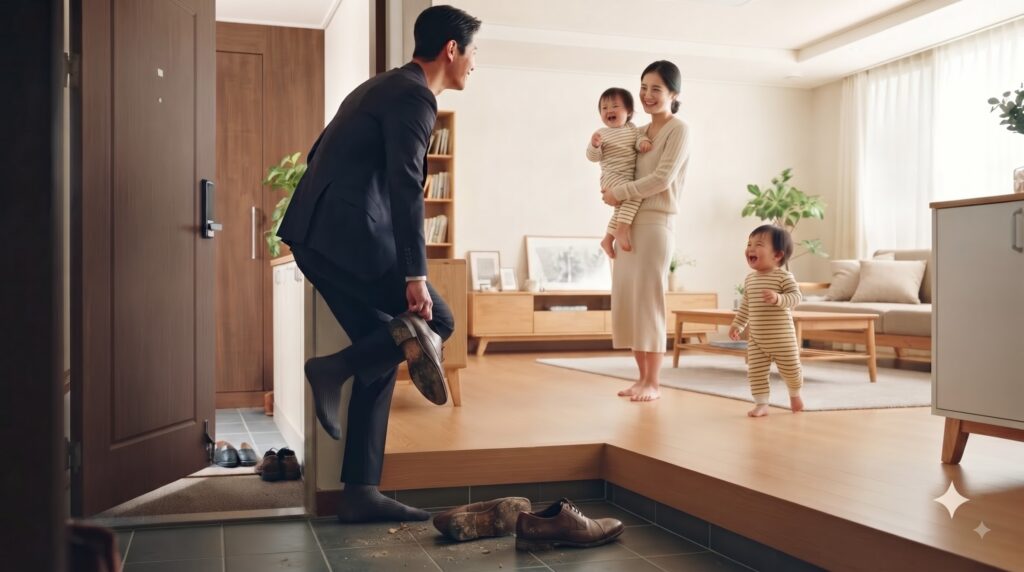

외국인 관광객이나 이주민들이 한국 가정이나 식당(좌식 공간)에 방문했을 때 가장 먼저 놀라는 문화 중 하나는 바로 ‘현관에서 무조건 신발을 벗는 것’입니다. 바깥의 먼지와 세균이 묻은 신발을 신고 실내로 들어가는 것이 자연스러운 서구권 문화와 달리, 한국에서는 집안이나 실내 공간을 가장 깨끗하고 안락한 안식처로 여깁니다. 이번 포스팅에서는 한국인들이 집에 들어갈 때 무조건 신발을 벗는 문화적 배경과 실내 청결 기준에 대해 자세히 알아보겠습니다.
1. 전통 온돌 문화와 좌식 생활의 영향
한국의 주거 문화는 바닥을 난방하는 고유의 난방 시스템인 ‘온돌(Ondol)’에서 발전했습니다. 과거부터 한국인들은 바닥에 직접 앉거나 눕는 ‘좌식 생활’을 중심으로 삼아왔습니다.
- 바닥이 곧 생활 공간이자 침실이기 때문에, 외부의 먼지와 이물질이 실내로 유입되는 것을 극도로 꺼리게 되었습니다.
- 신발을 벗음으로써 바닥을 항상 깨끗하게 유지하고, 가족들이 안심하고 뒹굴 수 있는 아늑한 공간을 만들 수 있습니다.
2. 청결과 위생을 향한 높은 기준
한국 사회는 실내 공간의 위생 관념이 매우 엄격한 편입니다. 집은 하루 동안 쌓인 피로를 풀고 재충전하는 가장 순수한 공간이어야 한다는 인식이 강합니다.
- 외부 신발에는 눈에 보이지 않는 수많은 세균과 미세먼지가 묻어 있기 때문에, 이를 거실이나 방으로 옮기는 것은 위생상 용납되지 않습니다.
- 매일 청소기를 돌리고 물걸레질을 하는 한국 가정의 특성상, 신발을 벗는 행위는 깨끗한 실내 환경을 유지하기 위한 가장 기초적이고 필수적인 첫 단계입니다.
3. 심리적 안락함과 ‘휴식’의 경계선
현관에서 신발을 벗는 것은 단순한 위생 습관을 넘어 ‘외부 세계’와 ‘내 집(안전지대)’을 분리하는 심리적인 의식의 의미를 가집니다.
- 현관에 신발을 벗어두는 순간, 사회에서의 스트레스와 긴장감이 해소되고 진정한 휴식이 시작됩니다.
- 집 안에서는 양말을 벗거나 맨발로 편안하게 걸으며 온전한 자유로움을 누릴 수 있는 안락함을 제공합니다.
4. 실내에서 신발을 신을 때 생기는 위생적 문제점
신발을 벗지 않고 실내 생활을 지속할 경우, 외부 오염물질로 인해 다음과 같은 건강 및 위생상 문제가 발생할 수 있습니다.
- 대장균 및 유해 세균 유입: 바깥의 공중화장실이나 오염된 길거리를 걸으며 신발 바닥에 붙은 수많은 박테리아(대장균 등)가 실내 바닥으로 그대로 옮겨져 호흡기나 피부 건강을 위협할 수 있습니다.
- 미세먼지 및 화학 물질 축적: 아스팔트의 매연 찌꺼기, 중금속, 제초제 성분 등이 신발 밑창을 통해 실내로 들어와 바닥에 쌓이게 되고, 영유아나 반려동물이 있는 가정에서는 이를 그대로 흡입하거나 접촉해 건강에 악영향을 줄 수 있습니다.
외국인이 알아둘 점
이론은 이 정도로 하고, 실제로 한국 가정이나 식당을 방문할 때 알아두면 좋은 것들을 정리해봤습니다.
- 깨끗한 양말을 챙기세요: 한국 가정이나 좌식 식당을 방문할 계획이 있다면, 구멍 나지 않은 깨끗한 양말을 신는 것이 예의입니다. 갑작스러운 방문이라도 양말이 지저분하면 민망할 수 있으니 미리 신경 써두시면 좋습니다.
- 손님용 슬리퍼가 있는 경우가 많아요: 신발을 벗고 나면 현관에 손님용 슬리퍼가 준비되어 있는 경우가 흔합니다. 없다면 맨발이나 양말 차림으로 다니셔도 전혀 실례가 아닙니다.
- 좌식 식당의 신발 보관에 유의하세요: 삼겹살집이나 전통 한정식집처럼 좌식으로 운영되는 식당은 입구에 신발장이나 신발 정리대가 있습니다. 특히 사람이 많은 식당에서는 비슷하게 생긴 신발이 섞이는 경우가 있으니, 특징적인 신발이 아니라면 위치를 기억해두시는 게 좋습니다.
- 일부 사무실·전통 공간도 해당됩니다: 가정과 식당뿐 아니라, 일부 전통찻집이나 소규모 사무실, 학원 등에서도 신발을 벗도록 요청하는 경우가 있습니다. 입구에 신발이 여러 켤레 놓여 있다면 그 공간의 규칙을 따르시면 됩니다.
- 헷갈리면 눈치껏 따라 하세요: 확신이 안 서는 상황이라면, 함께 들어가는 한국인 친구나 다른 손님들의 행동을 보고 따라 하시는 게 가장 안전한 방법입니다.
한국인들이 집에 들어갈 때 무조건 신발을 벗는 이유는 바닥을 난방하는 전통 온돌 문화와 좌식 생활 방식에서 비롯되었습니다. 외부의 세균과 먼지로부터 실내 공간을 보호하여 가족의 건강과 위생을 지키려는 높은 청결 기준이 반영되어 있으며, 밖의 치열한 일상과 안의 편안한 휴식을 나누어주는 심리적 경계선의 역할도 합니다.
한국의 다른 독특한 생활 문화가 궁금하시다면, [한국은 왜 줄을 서는가?](여기에 해당 글 링크)도 함께 확인해보세요.
English Summary
Koreans always take off their shoes indoors, a custom rooted in the traditional “Ondol” floor-heating system and a floor-sitting lifestyle where the floor doubles as a living and sleeping space. This reflects strict hygiene standards (keeping out bacteria, fine dust, and chemical residue from shoe soles) as well as a psychological boundary between the stress of the outside world and the comfort of home. Practical tips for visitors: wear clean, hole-free socks when visiting a Korean home or floor-seating restaurant; guest slippers are often provided at the entrance; remember where you left your shoes at busy floor-seating restaurants; and when in doubt, simply follow what your host or other guests are doing.
본 콘텐츠는 AI의 도움을 받아 작성되었으며, 최신 정책 확인 및 필자의 검토·수정을 거쳐 게시되었습니다.