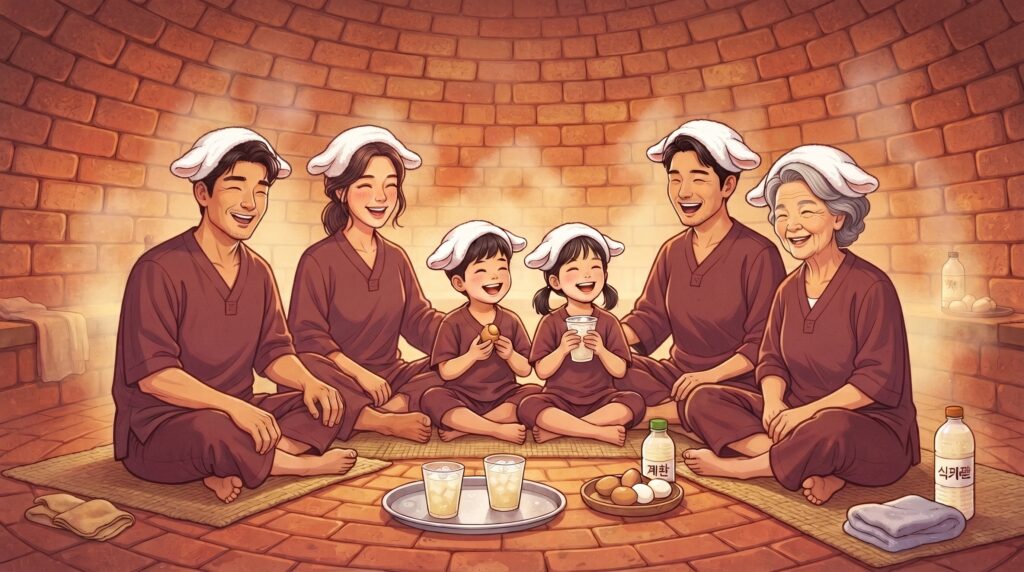

한국 드라마나 영화를 보면 사람들이 수건으로 양머리를 만들고 찜질방에 앉아 구운 계란과 식혜를 먹는 모습을 쉽게 볼 수 있습니다. 외국인들의 눈에는 한국의 대중목욕탕과 전통 찜질방 문화가 매우 신기하고 흥미롭게 다가옵니다. 로마의 화려한 공중목욕탕이나 일본의 ‘온센’ 문화를 떠올릴 수 있지만, 한국의 목욕 문화는 단순한 입욕을 넘어 독특한 휴식 공간으로 진화했습니다.
In Korean dramas, you’ve probably seen people with towel “sheep-head” wraps eating baked eggs and sikhye at a jjimjilbang. While you might think of Rome’s grand public baths or Japan’s “onsen” culture, Korea’s bathing culture has evolved into something uniquely its own.
1. 목욕탕과 찜질방의 명확한 차이점
목욕탕은 성별이 분리되어 알몸으로 몸을 씻고 온탕에 몸을 담그는 전통적인 공간입니다. 반면, 찜질방은 목욕 시설을 기본으로 갖추고 있으면서도 남녀노소가 함께 전용 찜질복을 입고 모이는 휴식 공간입니다.
Mok-yok-tang (bathhouse) is a gender-separated space where people wash and soak in hot tubs while unclothed. Jjimjilbang, on the other hand, includes bathing facilities but is a shared communal space where people of all ages wear provided uniforms.
2. 찜질방 문화의 하이라이트: 구운 계란과 식혜
찜질방의 진정한 매력은 뜨거운 방에서 땀을 뺀 뒤 즐기는 간식 문화에 있습니다. 고온의 찜질방에서 손실된 수분과 전해질을 보충하기 위해 시원하고 달콤한 ‘식혜’와 단백질이 풍부한 ‘구운 계란’을 먹는 것은 절대 놓칠 수 없는 국룰입니다.
The real charm of a jjimjilbang lies in its snack culture. Eating sweet, ice-cold “sikhye” and protein-rich baked eggs after sweating in the hot rooms is an absolute must.
실전 가이드: 요금은 어떻게 내고, 얼마나 드나요?
- 입장 방식: 입구에서 이용료(보통 10,000~15,000원)를 내고 손목 밴드(웨어러블 락커키)를 받습니다. 이 밴드가 사물함 키이자 동시에 결제 수단입니다.
- 간식·시설 이용은 후불로: 안에서 식혜, 구운 계란, 마사지 등을 이용할 때는 현금이나 카드를 따로 낼 필요 없이 손목 밴드를 태그하면 되고, 나갈 때 한 번에 정산합니다.
- 찜질복은 무료 제공: 입장료에 찜질복(위아래 세트)과 수건이 포함되어 있는 경우가 대부분입니다.
How to pay: Pay the entrance fee (usually 10,000–15,000 KRW) at the front desk and receive a wristband, which serves as both your locker key and payment method. Snacks and extra services (sikhye, baked eggs, massages) are tagged to your wristband and settled all at once when you leave. Uniforms are usually included in the entrance fee.
외국인이 알아둘 점
- 목욕탕 구역은 완전 나체가 원칙입니다: 목욕탕(대욕장) 구역은 수영복 착용이 금지되고, 완전히 옷을 벗고 씻은 뒤 탕에 들어가야 합니다. 처음엔 어색할 수 있지만, 다들 신경 쓰지 않으니 편하게 이용하시면 됩니다. (찜질방의 공용 휴게 공간에서는 찜질복을 입으니 걱정 없어요.)
- 문신이 있다면 미리 확인하세요: 일부 대중목욕탕이나 찜질방은 큰 문신이 있으면 입장을 제한하는 경우가 있습니다(과거 조직폭력배 연상 이미지 때문). 문신이 크다면 방문 전 해당 업소에 전화로 확인하거나, 관광객에게 관대한 것으로 알려진 대형 찜질방(드래곤힐스파, 스파랜드 등)을 이용하시는 게 안전합니다.
- 숙박비를 아끼는 꿀팁이 될 수 있어요: 대부분의 찜질방은 24시간 운영되고, 저렴한 가격(위 요금 그대로)에 하룻밤 묵을 수 있는 수면실이 따로 있습니다. 야간 기차나 이른 비행기를 앞두고 숙소를 잡기 애매할 때, 찜질방이 훌륭한 대안이 될 수 있습니다.
- 휴대폰과 소지품은 사물함에: 대욕장 안에는 휴대폰을 가지고 들어갈 수 없습니다(사진 촬영 절대 금지). 사물함에 넣어두고, 공용 공간에서만 사용하세요.
찜질방을 처음 방문하는 외국인이라면 먼저 목욕탕 구역에서 깨끗이 씻은 후 찜질복으로 갈아입어야 합니다. 뜨거운 찜질방 안에서 시원한 식혜를 마시는 극적인 온도 차이를 즐겨보는 것이 핵심입니다. 세계 곳곳에 목욕 문화가 존재하지만, 한국의 찜질방은 단순한 사우나를 넘어 세대가 소통하고 일상의 피로를 푸는 독창적인 라이프스타일 공간입니다.
First-time visitors should wash thoroughly in the bathing area before changing into their jjimjilbang uniform — and don’t miss the dramatic contrast of sipping ice-cold sikhye inside a hot sauna room. While bathing cultures exist worldwide, Korea’s jjimjilbang goes beyond a simple sauna to become a unique lifestyle space where generations connect and unwind.
한국 여행 중 급하게 약이 필요할 때 도움이 되는 정보가 궁금하시다면, [한국 여행의 구원자, 편의점 상비약](여기에 해당 글 링크)도 함께 확인해보세요.
If you ever need medicine during your trip, check out our guide to [convenience store medicine in Korea](여기에 해당 글 링크).
본 콘텐츠는 AI의 도움을 받아 작성되었으며, 최신 정책 확인 및 필자의 검토·수정을 거쳐 게시되었습니다.
This content was created with AI assistance, then reviewed and edited by the author based on the latest available information.