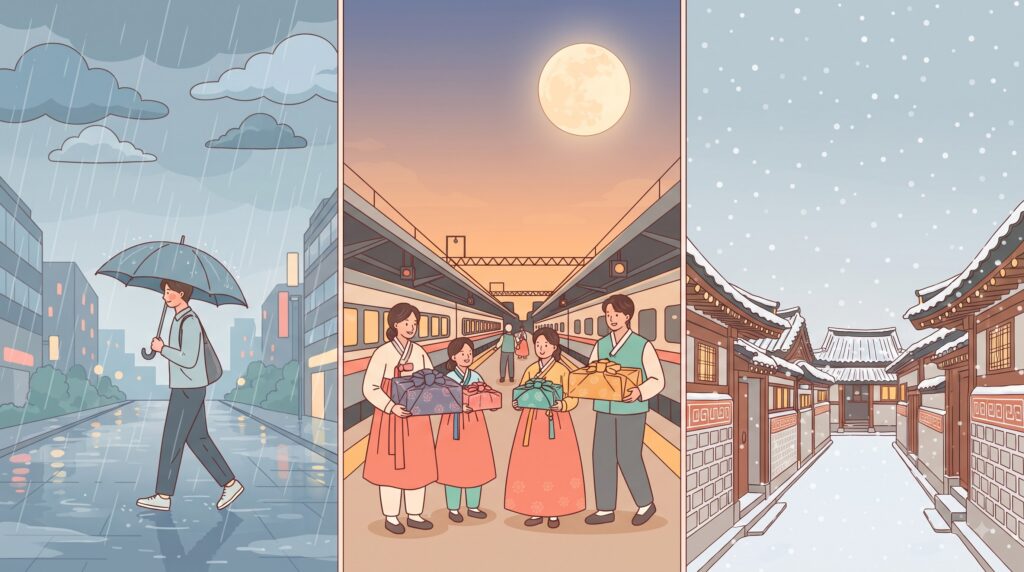

한국 여행을 계획할 때 항공권이나 숙소만큼 중요한 게 바로 “언제 가느냐”입니다. 한국은 사계절이 뚜렷한 나라라서, 같은 도시라도 방문 시기에 따라 완전히 다른 여행이 됩니다. 오늘은 무조건 피해야 할 기간부터 계절별 특징, 그리고 여름이 싫은 사람과 겨울이 싫은 사람 각각에게 어떤 시기가 맞는지까지 정리해봅니다.
When planning a trip to Korea, timing matters just as much as flights or hotels. Korea has four distinct seasons, so the same city can feel like a completely different destination depending on when you visit. Today we’ll cover the dates you should avoid, what each season is actually like, and which months make sense depending on whether you want to dodge the heat or the cold.
일단 피하는 게 좋은 기간: 설날과 추석
한국의 2대 명절인 설날(음력 1월 1일)과 추석(음력 8월 15일)은 여행자에게는 피하는 게 좋은 기간입니다. 거의 전 국민이 고향으로 이동하기 때문에 기차표와 고속도로가 극심하게 붐비고, 동네 식당이나 전통시장 같은 작은 상점 상당수가 며칠씩 문을 닫습니다. 참고로 2027년 기준 설날은 2월 6일(연휴 2월 5일~8일), 추석은 9월 15일경으로 예상되는데, 두 명절 모두 음력 기준이라 매년 날짜가 바뀌니 여행 계획을 세우실 때는 해당 연도의 정확한 날짜를 꼭 다시 검색해보시길 권장합니다. 이전에 다뤘던 추석 연휴 한국여행 주의사항 글에서 명절 기간 구체적인 대처법을 더 자세히 다뤘으니 함께 참고하시면 좋습니다.
The periods worth avoiding: Seollal and Chuseok
Korea’s two biggest holidays, Seollal (Lunar New Year) and Chuseok (Korean Thanksgiving), are best avoided if you’re traveling here. Nearly the entire country travels to their hometowns, so trains and highways get extremely congested, and many small restaurants and traditional markets close for several days. For reference, in 2027 Seollal falls on February 6 (with the holiday running February 5-8) and Chuseok is expected around September 15 — but since both follow the lunar calendar, the exact dates shift every year, so it’s worth double-checking the specific dates for whichever year you’re traveling. Our earlier post on things to know when traveling during Chuseok covers this in more detail.
7~9월, “성수기”라는 말로는 부족합니다
흔히 7~9월을 여름 성수기라고 뭉뚱그려 말하지만, 실제로는 안에 성격이 다른 세 구간이 섞여 있습니다. 6월 말부터 7월 중순까지는 장마철로, 습하고 비가 자주 내려서 야외 일정이 계속 틀어지기 쉽습니다. 7월 말부터 8월 중순까지는 장마가 끝나고 본격적인 폭염이 시작되는 시기인 동시에, 한국인들의 여름휴가가 몰리는 극성수기라 항공권과 숙박비가 1년 중 가장 비쌉니다. 8월 말에서 9월 초까지도 늦더위가 이어지는 경우가 많습니다. 즉 무더위와 습도, 거기에 비싼 여행 비용까지 겹치는 구간이라, 더위에 약하시다면 이 시기는 피하시는 걸 추천드립니다.
July through September: “peak season” doesn’t tell the whole story
People often lump July through September together as “summer peak season,” but it’s actually three different phases stacked on top of each other. Late June through mid-July is monsoon season (jangma), with frequent rain and high humidity that can disrupt outdoor plans. Late July through mid-August is when the monsoon ends and genuine heatwave conditions kick in, right as Korean domestic summer vacation season peaks — meaning flights and hotels hit their most expensive point of the year. Lingering heat often continues into early September as well. If you’re heat-sensitive, this stretch combines the worst of humidity, heat, and high prices, so it’s generally worth avoiding.
계절별로 뜯어보면 이렇습니다
봄(3~5월)은 벚꽃 시즌이 하이라이트인데, 서울 기준으로 보통 4월 초순에 개화해서 일주일 남짓 절정을 이룹니다. 날씨는 화창하고 걷기 좋지만, 봄철엔 미세먼지가 심한 날도 종종 있다는 점은 감안해야 합니다. 가을(9월 말~11월)은 단풍이 절정인 10월 말에서 11월 초를 중심으로, 습도 낮고 화창한 날이 많아 개인적으로나 여행 커뮤니티에서나 한국 여행 최적기로 가장 많이 꼽히는 계절입니다. 겨울(12~2월)은 기온이 영하로 떨어지는 날이 흔하고 건조한 대신, 스키·온천·크리스마스 마켓처럼 여름엔 즐길 수 없는 콘텐츠가 있고 항공권도 성수기보다 저렴한 편입니다.
Breaking down each season
Spring (March-May) peaks with cherry blossom season, which typically starts blooming in Seoul in early April and reaches full bloom for about a week or so. The weather is pleasant and great for walking around, though spring is also when fine-dust days tend to be more frequent. Fall (late September-November) centers on peak foliage from late October into early November, with low humidity and clear skies — this is the season most frequently cited, both anecdotally and among travel communities, as Korea’s best time to visit. Winter (December-February) regularly dips below freezing and stays dry, but it also comes with things you can’t do in summer — skiing, hot springs, Christmas markets — and flights tend to be cheaper than during peak season.
계절마다 완전히 달라지는 거리 옷차림도 눈여겨볼 포인트
한국은 사계절이 이렇게 뚜렷하다 보니, 계절마다 거리에서 보이는 옷차림 자체가 확 달라지는 것도 재미있는 포인트입니다. 겨울엔 두꺼운 롱패딩과 목도리가 거리를 뒤덮다시피 하고, 여름엔 반팔·반바지에 양산까지 등장하며, 봄가을엔 얇은 겉옷을 여러 겹 겹쳐 입는 레이어드 스타일이 흔합니다. 같은 도시인데도 계절마다 완전히 다른 분위기의 거리 패션을 볼 수 있다는 건, 사계절이 뚜렷한 나라를 여행하는 재미 중 하나이기도 합니다. 실용적으로는, 여행 짐을 쌀 때도 이 점을 감안해서 방문하는 계절에 맞는 옷을 챙기시되, 환절기(3~4월, 9~10월)에는 낮과 밤의 기온차가 커서 얇은 겉옷 하나 정도는 여름이라도 챙겨가시는 걸 추천드립니다.
How dramatically street fashion changes with each season
Because Korea’s four seasons are so distinct, the way people dress on the street changes dramatically with them too — which is genuinely one of the fun things to notice while traveling here. Winter blankets the streets with long padded coats and scarves, summer brings out short sleeves, shorts, and even parasols, and spring and fall are dominated by light layered outerwear. Seeing the same city take on such a different fashion mood depending on the season is part of the charm of visiting a country with four sharply defined seasons. On the practical side, pack according to whichever season you’re visiting, and even in summer, bring at least one light layer for the shoulder seasons (March-April, September-October), when the temperature swing between day and night can be significant.
여름이 싫다면, 겨울이 싫다면
정리하면 이렇습니다. 무더위와 습도가 정말 싫다면 7~8월은 피하고 대신 5~6월 초나 9월 말~10월을 노리시는 게 좋습니다. 반대로 추위에 약하시다면 12~2월은 피하고 대신 3~4월이나 10~11월을 고려하시면 됩니다. 결과적으로 봄과 가을, 그중에서도 특히 가을이 더위도 추위도 피하면서 명절 기간과도 잘 안 겹치는, 가장 무난한 선택지가 되는 경우가 많습니다.
If you want to avoid summer, or avoid winter
To sum up: if you really can’t handle heat and humidity, skip July-August and aim for late May/early June or late September-October instead. If you’re cold-sensitive, skip December-February and consider March-April or October-November instead. In practice, spring and especially fall tend to be the safest overall picks — they dodge both extreme heat and extreme cold, and usually don’t overlap with the major holiday periods either.
요약
한국 여행 시기를 정할 땐 설날·추석 명절(매년 날짜가 바뀌니 확인 필수)을 우선 피하고, 7~9월은 장마·폭염·성수기 물가가 겹치는 구간이라는 걸 감안하세요. 더위를 피하고 싶다면 늦봄이나 초가을, 추위를 피하고 싶다면 봄이나 가을이 무난한 선택이며, 전반적으로는 가을이 가장 균형 잡힌 시기로 꼽힙니다.
Summary
When picking dates for a Korea trip, avoid the Seollal and Chuseok holiday periods first (the exact dates shift every year, so check ahead), and keep in mind that July-September combines monsoon rain, heatwave conditions, and peak-season prices. If you want to dodge the heat, late spring or early fall work well; if you want to dodge the cold, spring or fall are safe bets — and overall, fall tends to be the most consistently recommended season to visit.
출처 (Sources)
- 대한민국 정책브리핑, 2027년 공휴일 및 설날·추석 연휴 안내
AI 활용 고지 본 콘텐츠는 AI의 도움을 받아 작성되었으며, 최신 정책 확인 및 필자의 검토·수정을 거쳐 게시되었습니다. This content was created with AI assistance, then reviewed and edited by the author based on the latest available information.