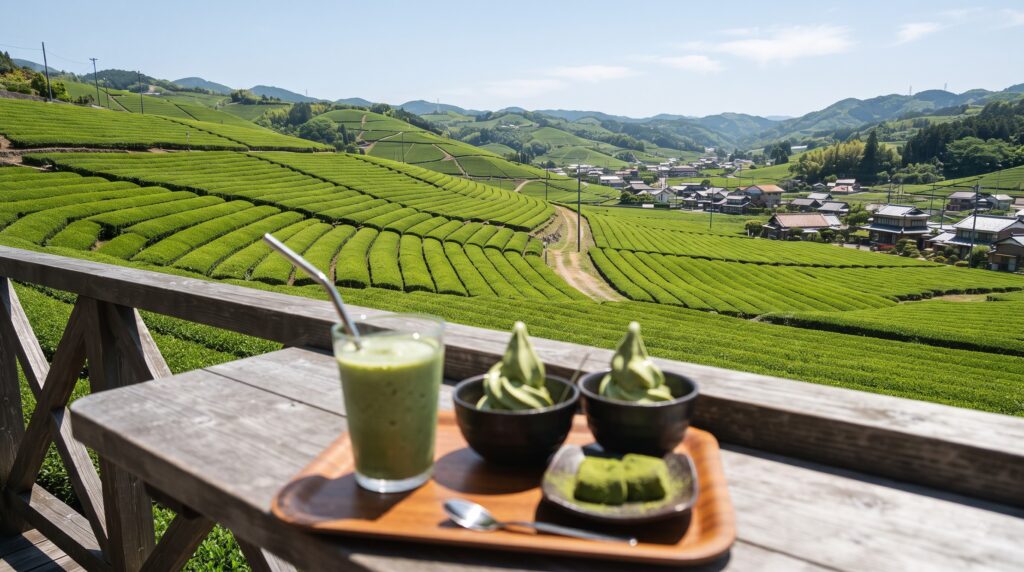

중국이나 인도, 스리랑카를 여행해본 적이 있다면 “한국 녹차가 뭐가 특별하냐”는 생각이 들 수 있습니다. 실제로 생산량만 놓고 보면 한국은 세계적인 차 생산국과 비교가 되지 않습니다. 하지만 보성을 찾는 이유는 애초에 “누가 차를 더 많이, 더 잘 만드느냐”가 아닙니다. 야산의 능선을 따라 겹겹이 이어지는 초록빛 계단식 다원, 그리고 그 위로 아침 안개가 깔리는 풍경 자체가 목적지인 곳입니다. 아이슬란드가 세계 최대 생산국이라서가 아니라 풍경 때문에 여행지가 된 것처럼, 보성도 마찬가지입니다.
If you’ve traveled in China, India, or Sri Lanka, you might wonder what’s special about Korean green tea. In terms of sheer production volume, Korea simply can’t compete with the world’s major tea-growing nations. But that was never the point of visiting Boseong. The destination is the scenery itself — tiered rows of green tea bushes wrapping around low hillsides, often blanketed in morning fog. Boseong isn’t a travel destination because Korea produces the most tea, the same way Iceland isn’t a travel destination because it produces the most of anything. The landscape is the product.
왜 굳이 보성이어야 할까요
보성은 재배면적 기준으로 전국 차밭의 약 37%를 차지하는, 한국에서 가장 밀도 높은 차 산지입니다(1973년에는 이 비중이 전국의 74%에 달했을 정도로 오랫동안 한국 차 산업의 중심지였습니다). 이렇게 한 지역에 다원이 집중돼 있다 보니 능선을 따라 이어지는 계단식 밭의 규모 자체가 다른 지역과 비교가 안 됩니다. 여기에 더해 대한다원을 비롯한 보성의 다원들은 CNN이 선정한 “세계에서 가장 놀라운 풍경 31선”에 한국에서 유일하게 이름을 올린 곳이기도 하고, 광고와 드라마·영화 촬영지로도 자주 등장해온 곳입니다. 즉 “한국에서 녹차를 마셔볼 수 있는 곳”이 아니라 “한국에서 이런 풍경을 볼 수 있는 유일한 곳”이라는 게 보성이 여행지로서 갖는 진짜 차별점입니다.
Why Boseong specifically
Boseong accounts for roughly 37% of Korea’s total tea-growing land — making it, by far, the country’s most concentrated tea-growing region (in 1973, that figure was as high as 74%, reflecting just how long this area has been the center of Korea’s tea industry). Because so many plantations are clustered together, the scale of the terraced hillsides here isn’t comparable to anywhere else in Korea. On top of that, Boseong’s tea fields — including the well-known Daehan Dawon plantation — are the only entry from Korea on CNN’s list of the “World’s 31 Most Stunning Landscapes,” and the area has long been a go-to filming location for commercials, dramas, and films. In other words, Boseong isn’t “a place where you can drink green tea” — it’s “the one place in Korea where you can see this particular landscape.” That’s its real differentiator as a destination.
실제로 가면 뭘 하나요
가장 유명한 다원(대한다원)은 입장료가 약 4,000원이고, 여름에는 오전 9시~오후 8시, 겨울에는 오전 9시~오후 7시까지 운영됩니다. 입구에서 시작해 향나무숲을 지나 녹차밭 전망대, 그리고 정상의 바다 전망대까지 올라가는 코스는 왕복 약 1시간 30분~2시간 정도 걸리는데, 힘든 등산이 아니라 완만한 산책에 가깝습니다. 방문 시기는 늦가을부터 다음 해 5월까지가 가장 좋고, 찻잎을 수확하는 7월은 습도도 높고 밭 정리 시기와 겹쳐 추천하지 않습니다. 매년 5월 초에는 보성 다향대축제(녹차 축제)가 열려 다원이 가장 활기를 띠는 시기이기도 합니다.
What you actually do once you’re there
The main plantation (Daehan Dawon) charges about 4,000 KRW admission and is open 9 a.m.–8 p.m. in summer and 9 a.m.–7 p.m. in winter. The walking course — from the entrance through a juniper forest, up to a green tea field observatory, and finally to an ocean-view lookout at the top — takes about 1.5 to 2 hours round trip, but it’s a gentle walk rather than a strenuous hike. The best time to visit is late fall through May; July, when the tea leaves are actually harvested, is best avoided due to humidity and field maintenance. Early May is also when the Boseong Tea Culture Festival (다향대축제) takes place, which is when the plantations are at their liveliest.
녹차로 만든 먹거리도 놓치지 마세요
보성에서는 녹차가 마시는 차를 넘어 하나의 식재료로 쓰입니다. 녹차 아이스크림은 기본이고, 녹차 가루를 반죽에 넣은 녹차 국수(냉면·칼국수)와 녹차 파전, 심지어 돼지고기를 녹차 사료로 키운 녹차 삼겹살, 녹차 카스텔라와 녹차 라떼까지 다양합니다. 다원 인근 식당가와 기념품점 어디를 가도 녹차를 활용한 메뉴를 쉽게 찾을 수 있어서, 차밭 구경만큼이나 먹거리 자체도 이 지역 여행의 중요한 부분입니다.
Don’t skip the green-tea food scene
In Boseong, green tea isn’t just something you drink — it’s a genuine ingredient. Green tea ice cream is the obvious starting point, but you’ll also find green tea noodles (in both cold and hot soup versions), green tea pajeon (savory pancakes), green tea samgyeopsal (pork raised partly on green-tea feed), and even green tea castella cake and green tea lattes. The restaurants and souvenir shops around the plantations almost all carry some green-tea version of a local dish, so the food is just as much a part of the trip as the scenery itself.
인천공항에서 보성까지 가는 법
가장 현실적인 방법은 철도와 시외버스를 조합하는 경로입니다. 참고로 예전에는 인천공항에서 광주·부산 방면 KTX가 환승 없이 직결 운행되던 시절이 있었지만, 이용률이 낮아 2018년 3월 이후 이 직결 노선은 없어졌습니다. 그래서 지금은 다음 순서로 이동해야 합니다.
- 인천공항 1터미널 또는 2터미널에서 공항철도(AREX) 직통열차를 타고 서울역까지 이동 (약 43~51분)
- 서울역에서 KTX(호남선)로 환승해 광주송정역까지 이동 (약 1시간 40분~2시간)
- 광주송정역 인근 또는 광주종합버스터미널(유스퀘어)에서 보성행 시외버스 탑승 (약 90분 소요, 요금 약 7,300원, 오전 6시 10분~오후 9시 40분까지 30분 간격 운행)
- 보성 시외버스터미널 도착 후, 다원행 로컬버스 또는 택시로 이동 (택시 기준 약 10~15분, 요금 약 1만~1만2천 원)
이 경로로는 인천공항에서 다원 입구까지 총 5~6시간 정도가 걸립니다. 대안으로 서울고속버스터미널에서 보성까지 바로 가는 직행 고속버스도 있지만(약 5시간 소요), 평일 오후 3시 10분, 주말 오전 8시 10분·오후 3시 10분 등 하루 1~2회만 운행돼 일정을 맞추기가 오히려 더 까다로울 수 있습니다. 이 정도 이동 시간을 고려하면, 보성은 당일치기보다는 순천만·여수 등 인근 지역과 묶어 1박 이상 일정으로 계획하시는 걸 추천합니다.
Getting from Incheon Airport to Boseong
The most realistic route combines rail and intercity bus. As a bit of background: there used to be a direct KTX service connecting Incheon Airport straight to Gwangju and Busan without a transfer, but it was discontinued in March 2018 due to low ridership. So today, the trip looks like this:
- From Incheon Airport Terminal 1 or 2, take the AREX express train to Seoul Station (about 43–51 minutes).
- Transfer to a KTX train on the Honam Line and ride to Gwangju-Songjeong Station (about 1 hour 40 minutes to 2 hours).
- From near Gwangju-Songjeong Station, or from the Gwangju U-Square intercity bus terminal, catch an intercity bus bound for Boseong (about 90 minutes, roughly 7,300 KRW, departing every 30 minutes between 6:10 a.m. and 9:40 p.m.).
- Once you arrive at Boseong Bus Terminal, take a local bus or taxi to the tea plantation (about 10–15 minutes by taxi, roughly 10,000–12,000 KRW).
All told, this route takes about 5 to 6 hours from the airport to the plantation entrance. There’s also a direct express bus from Seoul Express Bus Terminal straight to Boseong (about 5 hours), but it only runs once or twice a day — around 3:10 p.m. on weekdays and 8:10 a.m./3:10 p.m. on weekends — which can actually make scheduling harder. Given the travel time involved, we’d recommend treating Boseong as an overnight trip paired with nearby spots like Suncheon Bay or Yeosu, rather than a single-day round trip.
외국인 여행자라면 이 점을 미리 알아두세요
보성 시외버스터미널이나 다원 인근은 서울처럼 영어 안내가 잘 돼 있는 지역이 아닙니다. 로컬버스 요금은 티머니 카드로 결제되긴 하지만 배차 간격이 길고 안내판이 한국어 위주라, 구글맵이나 네이버맵 앱으로 미리 정류장과 배차 시간을 확인해두는 걸 추천합니다. 일행이 2~3명 이상이라면 광주나 순천에서 렌터카를 빌려 이동하는 편이 시간도 절약되고 훨씬 편합니다. 차밭 산책로는 흙길이라 우천 시 미끄러울 수 있으니 편한 신발은 필수이고, 다원 정상 전망대는 바람이 강한 편이라 계절에 맞는 겉옷을 챙기는 게 좋습니다. 언제 방문하는 게 좋을지 계절별로 더 자세히 비교해보고 싶으시다면 [“한국여행 추천시기] 글도 함께 참고하시면 도움이 됩니다.
What foreign travelers should know before going
Unlike Seoul, the Boseong bus terminal and the area around the plantations don’t have much English signage. Local buses do accept T-money cards, but they run infrequently and the signage is mostly in Korean, so it’s worth checking stops and schedules in advance using Google Maps or Naver Map. If you’re traveling in a group of two or three or more, renting a car in Gwangju or Suncheon will likely save time and be far more convenient. The walking paths through the tea fields are dirt trails that can get slippery in the rain, so comfortable shoes are a must, and the observatory at the top tends to be windy, so bring a layer appropriate for the season. If you’d like a more detailed season-by-season comparison of when to visit, our earlier post on [internal link: insert URL for “Best Times to Visit Korea”] covers that in more depth.
요약
보성은 세계 최대 녹차 생산지가 아니라, 재배면적 기준 전국의 약 37%가 몰려 있는 한국에서 가장 밀도 높은 차밭 풍경을 가진 곳입니다. CNN이 선정한 “세계에서 가장 놀라운 풍경 31선”에 한국에서 유일하게 포함됐고, 대한다원 등 다원 산책(입장료 약 4,000원, 왕복 1.5~2시간)과 녹차 아이스크림·녹차 삼겹살 같은 먹거리까지 함께 즐길 수 있습니다. 인천공항에서는 공항철도(서울역)→KTX(광주송정역)→시외버스(보성)→로컬버스·택시 순으로 이동하며 총 5~6시간이 걸리므로, 당일치기보다는 1박 이상 일정을 추천합니다.
Summary
Boseong isn’t the world’s largest green tea producer — it’s Korea’s single most concentrated tea-growing region, accounting for about 37% of the country’s tea-growing land, which is exactly what makes its terraced hillside scenery so distinctive. It’s the only entry from Korea on CNN’s list of the “World’s 31 Most Stunning Landscapes,” and beyond the walk through plantations like Daehan Dawon (about 4,000 KRW admission, 1.5–2 hours round trip), it offers a full lineup of green-tea foods, from ice cream to green-tea pork belly. Getting there from Incheon Airport means AREX to Seoul Station, a KTX transfer to Gwangju-Songjeong, an intercity bus to Boseong, and a final local bus or taxi — roughly 5 to 6 hours door to door, which makes an overnight trip a better plan than a single-day visit.
출처 (Sources)
- 전북일보, “[신팔도명물] 전남 보성 녹차” (보성 차 재배면적 전국 비중 37%, 1973년 74%)
- 텔트립(telltrip.com), “보성 대한다원, CNN이 선정한 세계적 초록 차밭” (CNN 세계 31대 절경 선정 내용)
- 경향신문 weekly khan, 보성 다원 관련 기사 (드라마·영화·광고 촬영지 관련)
- Korail(한국철도공사) 및 언론 보도, 인천공항 KTX 직결 노선 2018년 3월 중단 관련
- 광주-보성 시외버스 노선 시간표·요금 정보(현지 교통 안내 기준)
AI 활용 고지 본 콘텐츠는 AI의 도움을 받아 작성되었으며, 최신 정책 확인 및 필자의 검토·수정을 거쳐 게시되었습니다. This content was created with AI assistance, then reviewed and edited by the author based on the latest available information.