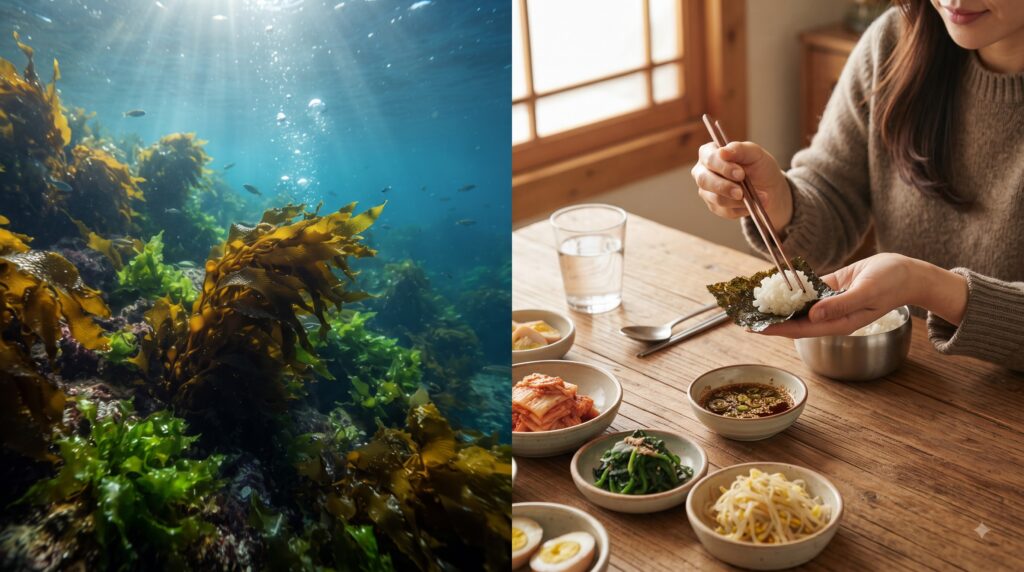
한국을 방문하거나 한국 문화를 접하는 외국인들이 가장 신기해하면서도 중독되는 한국의 대표적인 식재료가 있습니다. 바로 밥에 싸 먹는 바삭하고 짭조름한 ‘김(Laver)’과 생일이면 꼭 먹는 ‘미역(Seaweed)’입니다. 과거에는 외국인들에게 생소한 ‘검은 종이’ 같은 해조류였지만, 최근에는 건강 간식이자 K-푸드의 아이콘으로 전 세계적인 사랑을 받고 있습니다. 이번 포스팅에서는 외국인의 시선에서 궁금증을 자아내는 한국의 해조류 매력과, 김을 언제부터 어떻게 먹어왔는지의 역사와 조리법, 그리고 최근 탄소중립 시대에 주목받고 있는 친환경 가치에 대해 알아보겠습니다.
There is a representative Korean food ingredient that foreign tourists or those experiencing Korean culture find most fascinating and addictive. It is “Gim” (dried laver), the crispy and salty seaweed eaten wrapped around rice, and “Miyeok” (brown seaweed), which is a must-eat on birthdays. In the past, they were seaweed resembling unfamiliar “black paper” to foreigners, but recently they are loved worldwide as healthy snacks and icons of K-food. In this post, let’s explore the charm of Korean seaweed that arouses curiosity from a foreigner’s perspective, the history and cooking methods of when and how gim has been eaten, and its eco-friendly value drawing attention in the recent era of carbon neutrality.
1. 조선시대 역사 기록 속에서 찾은 ‘김’의 유래와 먹기 시작한 시기
Origin of “Gim” in Historical Records of the Joseon Dynasty and When People Started Eating It
한국인이 김을 언제부터 먹기 시작했는지에 대한 기록은 조선 시대로 거슬러 올라갑니다. 삼국시대부터 해조류를 채취해 먹었지만, 오늘날처럼 양식하고 가공해 먹는 형태의 ‘김’은 조선 시대 문헌에서 그 구체적인 기록을 찾을 수 있습니다.
The records on when Koreans started eating gim date back to the Joseon Dynasty. Although seaweed was gathered and eaten since the Three Kingdoms period, the specific form of “gim” cultivated and processed like today can be found in literature from the Joseon Dynasty.
- 조선시대의 지리지인 《동국여지승람》(1530년)에는 전라도 광양현(태인도)의 특산물로 김이 기록되어 있어, 이미 16세기부터 김 양식과 채취가 이루어졌음을 알 수 있습니다. (In “Dongguk Yeoji Seungnam” (1530), a geography book of the Joseon Dynasty, gim is recorded as a specialty of Gwangyang-hyeon (Taeindo) in Jeolla-do, showing that gim cultivation and harvesting were already taking place from the 16th century.)
- 조선 후기의 실학자 서유구의 《임원경제지》에는 김을 양식하는 방법과 채취하는 시기가 상세히 소개되어 있으며, 당시에도 귀한 향토 음식이자 임금님께 올리는 진상 품목으로 대접받았습니다. (In “Imwon Gyeongjeji” by Seo Yu-gu, a Silhak scholar of the late Joseon Dynasty, the methods of cultivating and harvesting gim are introduced in detail, and it was treated as a precious local food and a tribute item presented to the king even back then.)
2. 한국인은 김을 어떻게 먹을까? (다양한 섭취 방법)
How Do Koreans Eat Gim? (Various Ways of Consumption)
외국인들이 가장 궁금해하는 것 중 하나는 “이 검은 해조류를 도대체 어떻게 요리해 먹는가?”입니다. 한국인들은 김을 매우 다양한 방식으로 즐깁니다.
One of the things foreigners are most curious about is, “How on earth do you cook and eat this black seaweed?” Koreans enjoy gim in a wide variety of ways.
- 김싸먹기 (Rice Wrapper): 가장 기본적인 방법으로, 따뜻한 쌀밥을 네모난 조미김에 얹고 간장이나 양념을 살짝 찍어 싸 먹습니다. 밥 한 그릇을 뚝딱 비우게 만드는 최고의 밥도둑입니다. (The most basic method is placing warm white rice on square seasoned gim, dipping it slightly in soy sauce or seasoning, and wrapping it. It is the ultimate “rice thief” that makes you finish a bowl of rice in no time.)
- 김밥 (Gimbap): 김 위에 밥과 다양한 속재료(단무지, 시금치, 당근,햄, 계란 등)를 넣고 둥글게 말아 먹는 한국의 대표적인 소울 푸드이자 피크닉 메뉴입니다. (Gimbap is Korea’s representative soul food and picnic menu made by rolling rice and various ingredients (pickled radish, spinach, carrots, ham, eggs, etc.) inside gim.)
- 김자반과 국 (Side Dishes & Soup): 김을 잘게 부수어 설탕, 참기름, 깨와 함께 볶아 밑반찬(김자반)으로 먹거나, 떡국이나 미역국에 고명으로 얹어 풍미를 더합니다. (Gim is crushed finely and stir-fried with sugar, sesame oil, and sesame seeds to be eaten as a side dish (gimjaban), or added as a garnish to tteokguk or seaweed soup to enhance the flavor.)
3. 탄소 저감과 지구 환경을 지키는 바다의 보물, 해조류
Seaweed as a Treasure of the Sea Protecting Carbon Reduction and Global Environment
최근 환경 문제와 기후변화가 심각해지면서 지구의 탄소를 줄이는 데 미역과 김 같은 바다 식물이 엄청난 역할을 한다는 기사가 주목받고 있습니다.
As environmental problems and climate change have recently become severe, articles highlighting that marine plants like miyeok and gim play a tremendous role in reducing global carbon are drawing attention.
- 김이나 미역 같은 해조류는 육상 식물보다 훨씬 빠른 속도로 이산화탄소를 흡수하고 산소를 공급하는 뛰어난 ‘블루카본(Blue Carbon)’ 자원입니다. (Seaweeds like gim and miyeok are excellent “blue carbon” resources that absorb carbon dioxide and supply oxygen at a much faster rate than land plants.)
- 별도의 비료나 담수(민물)를 사용하지 않고도 바다에서 친환경적으로 자라기 때문에, 미래 세대를 위한 지속 가능한 친환경 먹거리로 각광받고 있습니다. (Because they grow eco-friendly in the ocean without using separate fertilizers or fresh water, they are spotlighted as sustainable eco-friendly food for future generations.)
4. 건강과 지구를 동시에 지키는 현명한 선택
A Wise Choice Protecting Both Health and Earth
한국인들이 매일 식탁에서 즐기는 김과 해조류는 단순한 반찬을 넘어, 맛과 영양 그리고 환경까지 생각하는 지혜가 담겨 있습니다.
Gim and seaweed that Koreans enjoy on their tables every day go beyond a simple side dish; they contain wisdom that considers taste, nutrition, and even the environment.
- 저칼로리이면서도 미네랄과 식이섬유가 풍부해 현대인의 건강을 지켜주는 최고의 슈퍼푸드입니다. (Being low in calories yet rich in minerals and dietary fiber, it is the ultimate superfood protecting modern health.)
- 맛있는 한식을 즐기는 것만으로도 환경 보호와 탄소 줄이기 운동에 동참할 수 있다는 점에서 큰 의미가 있습니다. (It holds great significance in that simply enjoying delicious Korean food allows you to participate in environmental protection and the carbon reduction movement.)
📌 5. 요약 (Summary)
- 김은 조선시대 기록(동국여지승람 등)에도 등장할 만큼 오랜 역사를 지닌 한국의 전통 식재료입니다. (Gim is a traditional Korean food ingredient with a long history, appearing as early as Joseon Dynasty records (such as Dongguk Yeoji Seungnam).)
- 한국인들은 김을 밥에 싸 먹거나, 김밥을 만들어 먹고, 반찬(김자반)이나 국의 고명으로 활용하는 등 다양하게 즐깁니다. (Koreans enjoy gim in various ways, such as wrapping rice with it, making gimbap, using it as a side dish (gimjaban), or as a soup garnish.)
- 최근 기사에서 조명되듯, 김과 미역 같은 해조류는 이산화탄소를 흡수하고 탄소를 줄이는 친환경 블루카본 자원입니다. (As highlighted in recent articles, seaweeds like gim and miyeok are eco-friendly blue carbon resources that absorb carbon dioxide and reduce carbon.)
🔗 참고 및 출처 (References):
- 조선시대 문헌 기록 및 글로벌 K-푸드 트렌드, 해조류 블루카본 연구 자료 (Historical literature records of the Joseon Dynasty, global K-food trends, and seaweed blue carbon research data)
이 글과 이미지는 AI를 이용하여 만들었습니다.
(This post and images were created using AI.)
