
한국 여행을 준비하는 외국인 친구들이 가장 놀라거나, 혹은 반대로 막막해하는 순간이 언제일까요? 바로 식당에 들어서는 순간입니다.
When are foreign friends preparing for a trip to Korea most surprised or bewildered? The exact moment they step into a restaurant.
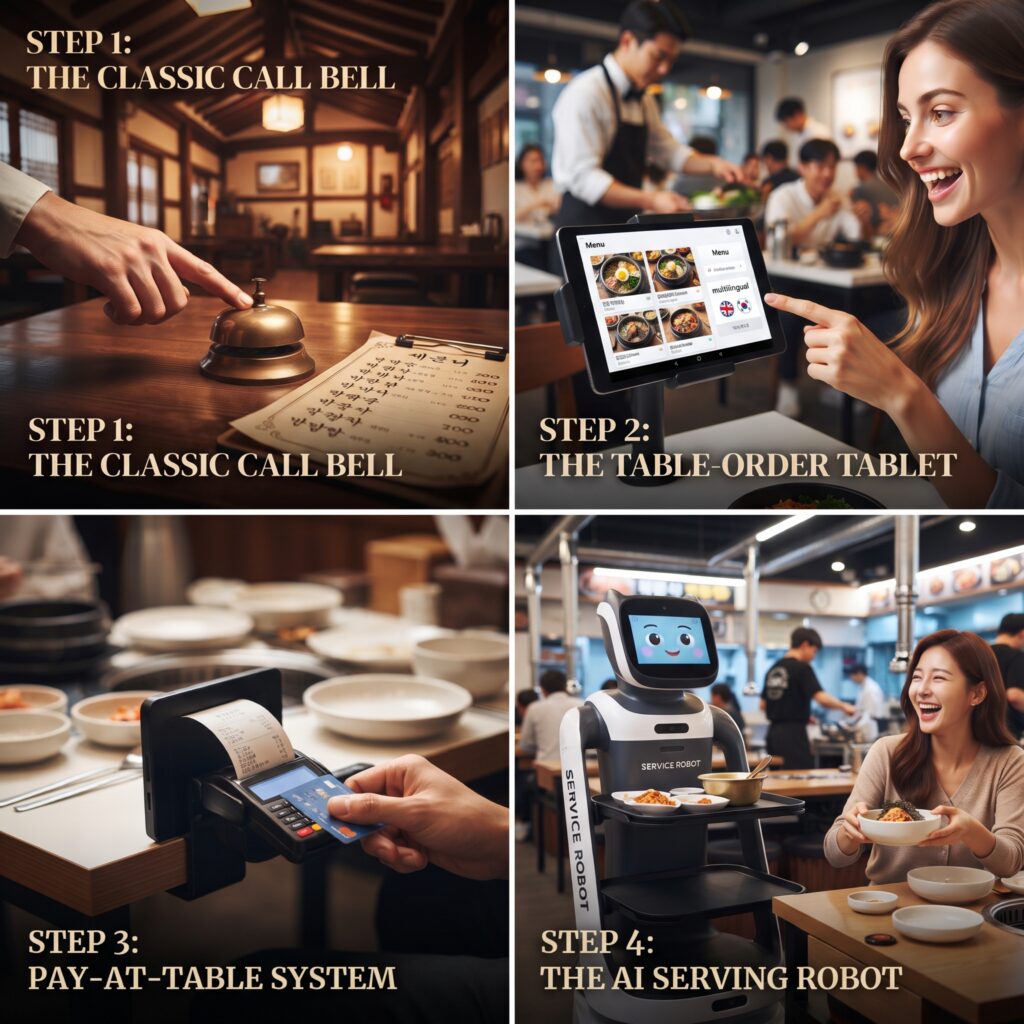
전 세계 많은 국가에서는 자리에 앉아 웨이터가 다가오기를 차분히 기다리거나 메뉴판을 한참 들여다보는 것이 자연스럽지만, 한국의 외식 문화는 이미 그 단계를 단숨에 뛰어넘었습니다. 놀랍게도 현재 한국의 식당가에는 아날로그식 전통 벨부터 최첨단 AI 로봇까지, 무려 4가지 세대의 주문·서빙 방식이 기묘하게 공존하고 있습니다.
In many countries, it’s natural to sit and wait calmly for a waiter or study the menu for a while — but Korea’s dining culture has already leaped past that stage. Remarkably, four different generations of ordering and serving methods, from analog bells to cutting-edge AI robots, strangely coexist in Korean restaurants today.
1단계: 추억의 소리, “저기요!”와 테이블 벨
한국 식당의 가장 원초적이면서도 활기찬 풍경입니다. 벽이나 테이블 측면에 붙어 있는 조그마한 벨을 누르면 “띵동~” 하고 소리가 울립니다.
This is the most primitive yet vibrant scene in a Korean restaurant — pressing a small bell on the wall or table sends out a cheerful “ding-dong~”.
- 외국인의 시선: 서구권에서는 웨이터를 큰 소리로 부르거나 손을 번쩍 드는 것이 다소 무례하거나 눈치가 보이는 행동일 수 있습니다. 하지만 한국에서는 이 벨 하나면 누구나 당당하게 직원을 부를 수 있습니다. 벨이 없는 곳이라면 “저기요!(Jeogiyo!)”라고 큰 소리로 부르면 됩니다 — 이것도 전혀 무례한 게 아니라 표준적인 방법입니다.
In Western cultures, loudly calling a waiter can feel rude. But in Korea, anyone can confidently press this bell. If there’s no bell, simply say “Jeogiyo!” loudly — this is completely normal, not rude at all.
2단계: 언어 장벽 프리 패스, 테이블오더
최근 몇 년 새 한국의 번화가나 프랜차이즈 식당을 점령한 주역입니다. 테이블마다 설치된 태블릿 화면을 통해 메뉴를 보고 직접 주문을 넣는 시스템입니다.
This has taken over downtown areas and franchise restaurants in recent years — a system where you view the menu and order directly through a tablet at your table.
- 외국인의 시선: 한국어를 몰라도 화면 상단에서 영어, 중국어, 일본어 등 다국어 지원을 선택하면, 사진과 함께 완벽한 번역으로 메뉴를 고를 수 있습니다.
Even without Korean, selecting English, Chinese, or Japanese at the top of the screen lets you order with photos and full translations.
3단계: 계산대 줄서기는 생략한다, 선결제 테이블오더
테이블오더의 진화형으로, 주문뿐만 아니라 결제까지 자리에서 다 끝내는 시스템입니다.
An evolved form of table-ordering — you complete both ordering and payment right at your seat.
- 외국인의 시선: 식사를 마치고 카운터로 몰려가 계산을 기다릴 필요가 없습니다. 여러 명이서 여행할 때 각자 먹은 만큼 나누는 더치페이(N빵) 기능까지 지원되는 곳도 많습니다.
No need to queue at the counter after your meal. Many places even support split-bill (Dutch pay) functions for group travelers.
4단계: SF 영화가 현실로, AI 서빙 로봇
주방에서 맛있는 냄새를 풍기며 테이블까지 자율주행으로 음식을 배달해 주는 미래형 로봇입니다.
A futuristic robot that autonomously delivers food to your table, straight from the kitchen.
- 외국인의 시선: 이제 대형 고깃집뿐만 아니라 일반 동네 식당에서도 로봇이 일하는 모습을 쉽게 볼 수 있습니다.
Robots are now common not just in large BBQ restaurants, but in ordinary neighborhood eateries too.
외국인이 알아둘 점
기술 이야기는 여기까지 하고, 실제로 한국 식당에서 식사할 때 꼭 알아두면 좋은 것들을 정리해봤습니다.
Beyond the tech, here’s what’s genuinely useful to know when dining in Korea.
- 팁 문화가 없습니다: 이게 가장 중요한 정보일 수 있어요. 한국은 식당, 택시, 호텔 등 어디에서도 팁을 주는 문화가 없습니다. 영수증 금액 그대로만 결제하시면 되고, 오히려 팁을 놓고 나가면 직원이 당황해서 쫓아올 수도 있습니다.
This might be the most important tip: Korea has no tipping culture — not at restaurants, taxis, or hotels. Pay exactly what’s on the receipt. Leaving extra cash may actually confuse staff, who might chase after you to return it. - 기계나 로봇이 오류가 나도 당황하지 마세요: 태블릿이 안 되거나 로봇이 멈춰도, 그냥 벨을 누르거나 “저기요!”라고 부르면 직원이 바로 도와줍니다. 기술이 다가 아니라, 사람이 항상 뒤에 있습니다.
If a tablet glitches or a robot stops, don’t panic — just press the bell or call “Jeogiyo!” and staff will help right away. Technology is a layer, not a replacement. - 인기 맛집은 예약 앱을 활용하세요: 캐치테이블(CatchTable) 같은 앱을 쓰면 유명 맛집도 미리 예약할 수 있어 웨이팅을 줄일 수 있습니다. 앱은 영어도 일부 지원합니다.
For popular restaurants, use reservation apps like CatchTable to book ahead and skip the wait — the app offers some English support. - 혼밥이 어려운 식당도 있어요: 삼겹살 같은 일부 고깃집은 ‘2인 이상 주문’을 기본으로 하는 경우가 있습니다. 혼자 여행 중이시라면, 1인 전문 식당(1인 고깃집, 라멘집 등)을 검색해서 찾아보시는 게 편합니다.
Some restaurants (especially certain BBQ places) require a minimum order for 2 people. If dining solo, search for “1인” (solo-friendly) restaurants instead.
한국의 모든 식당이 한꺼번에 최첨단으로 바뀐 것은 아닙니다. 골목 구석구석의 노포에서는 여전히 정겨운 ‘테이블 벨’의 추억을 느낄 수 있고, 트렌디한 서울의 중심가에서는 ‘AI 로봇과 선결제 시스템’의 최첨단을 맛볼 수 있습니다. 이 아날로그와 디지털의 공존이야말로 지금 한국 여행만이 줄 수 있는 가장 매력적인 관전 포인트입니다.
Not every restaurant in Korea has gone high-tech at once. Cozy alleyway eateries still carry the nostalgic charm of the table bell, while trendy downtown Seoul offers the cutting edge of AI robots and pay-at-table systems. This coexistence of analog and digital is one of the most charming things about traveling in Korea today.
한국 여행 중 급하게 약이 필요할 때 도움이 되는 정보가 궁금하시다면, [한국 여행의 구원자, 편의점 상비약](여기에 해당 글 링크)도 함께 확인해보세요.
If you ever need medicine during your trip, check out our guide to [convenience store medicine in Korea](여기에 해당 글 링크).
본 콘텐츠는 AI의 도움을 받아 작성되었으며, 최신 정책 확인 및 필자의 검토·수정을 거쳐 게시되었습니다.
This content was created with AI assistance, then reviewed and edited by the author based on the latest available information.